
Stands for: Direct Hair Implantation
Most Expensive Choice
Cost: £4,000 – £8,500+
DHI Hair Transplant



GMC-Registered Surgeons
Every procedure at our Nottingham clinic is carried out by a GMC-registered doctor
Nottingham City Centre
Centrally located and easy to reach from across the East Midlands by road and public transport
Free Consultation
An honest look at your hair loss, your donor supply, and what surgery can realistically achieve
Personalised Surgical Care
Your surgeon concentrates on your procedure throughout the day, no shared time between multiple patients
Direct Hair Implantation (DHI) uses advanced hair restoration technology to restore hair on your hairline and crown. A DHI hair transplant at the Nottingham clinic is surgeon-performed, minimally invasive and carried out at our CQC-registered East Midlands clinic. If you’re based in Nottingham, Beeston, or Stapleford, then book a free consultation for a DHI hair transplant today.
DHI Hair Transplant at the Nottingham Hair Transplant Clinic
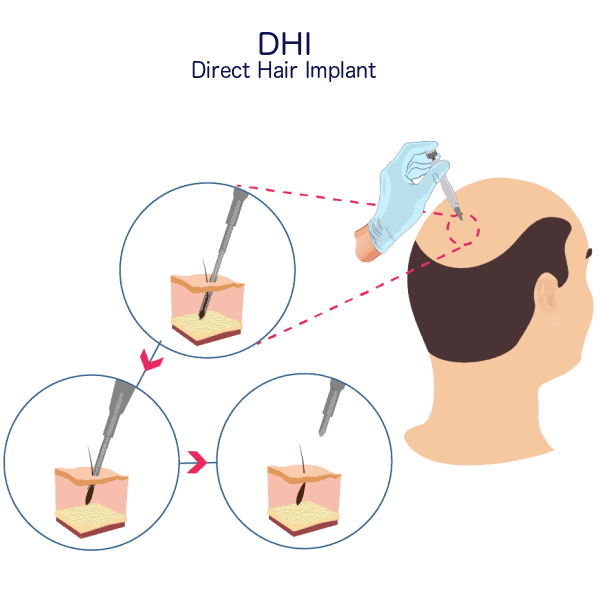
The DHI method (Direct Hair Implantation) is an innovative form of hair transplantation, where grafts (extracted follicles) are taken from the donor area and implanted directly into an area where a patient is experiencing hair loss (usually the receding hairline or crown). During a DHI hair transplant, a specialised CHOI implanter pen is used, making the implantation procedure swift and seamless.
The benefits of a DHI hair transplant over traditional FUE or FUT are:
- DHI is “surgeon-performed” – DHI requires the hair transplant surgeon to be directly involved in the critical stages of the transplant, particularly graft implantation. This allows for greater precision, consistency, and accountability throughout the procedure.
- DHI is minimally invasive – DHI uses a specialised implanter pen that allows follicles to be placed directly into the scalp without the need for pre-made incisions. This reduces trauma to the scalp tissue, limits bleeding, and lowers the risk of swelling compared to traditional techniques.
- DHI ensures a high graft survival rate – Because grafts are implanted immediately after extraction and spend minimal time outside the body, they are exposed to less dehydration and handling. This controlled process helps maximise follicle viability and improves overall graft survival.
- DHI has a short recovery time – With less tissue trauma and no linear scarring, patients typically experience faster healing, reduced post-operative discomfort, and a quicker return to normal daily activities compared to FUT and many conventional FUE procedures.
- DHI is performed under strict medical regulation – DHI at the Nottingham clinic is performed by GMC & ISHRS-accredited surgeons in a CQC-registered clinic. This adds an additional layer of quality control, patient safety, and procedural standardisation not always present in non-regulated FUE practices.
The direct hair implantation technique relies on the hair transplant surgeon using a CHOI implanter pen. Hair follicles are implanted directly into the recipient area, setting it apart from the FUE technique (which requires a surgical blade and forceps). As a result, every graft can be extracted and implanted in a single step, meaning hair follicles remain out of the scalp for a shorter period of time. Additionally, the CHOI implanter pen ensures greater control of angle, depth, and direction of hair growth.
At the Nottingham clinic, the DHI hair transplant is often chosen by patients wanting a precise hairline design or higher-density work. This makes it especially popular with patients aged 25-35 and/or experiencing the early stages of male pattern baldness (Hamilton-Norwood 3, 3V, 4). Suitability for the DHI hair transplant technique will be assessed during your initial consultation(s) with our patient advisor and surgeon.
A Selection of Our Before and After Results
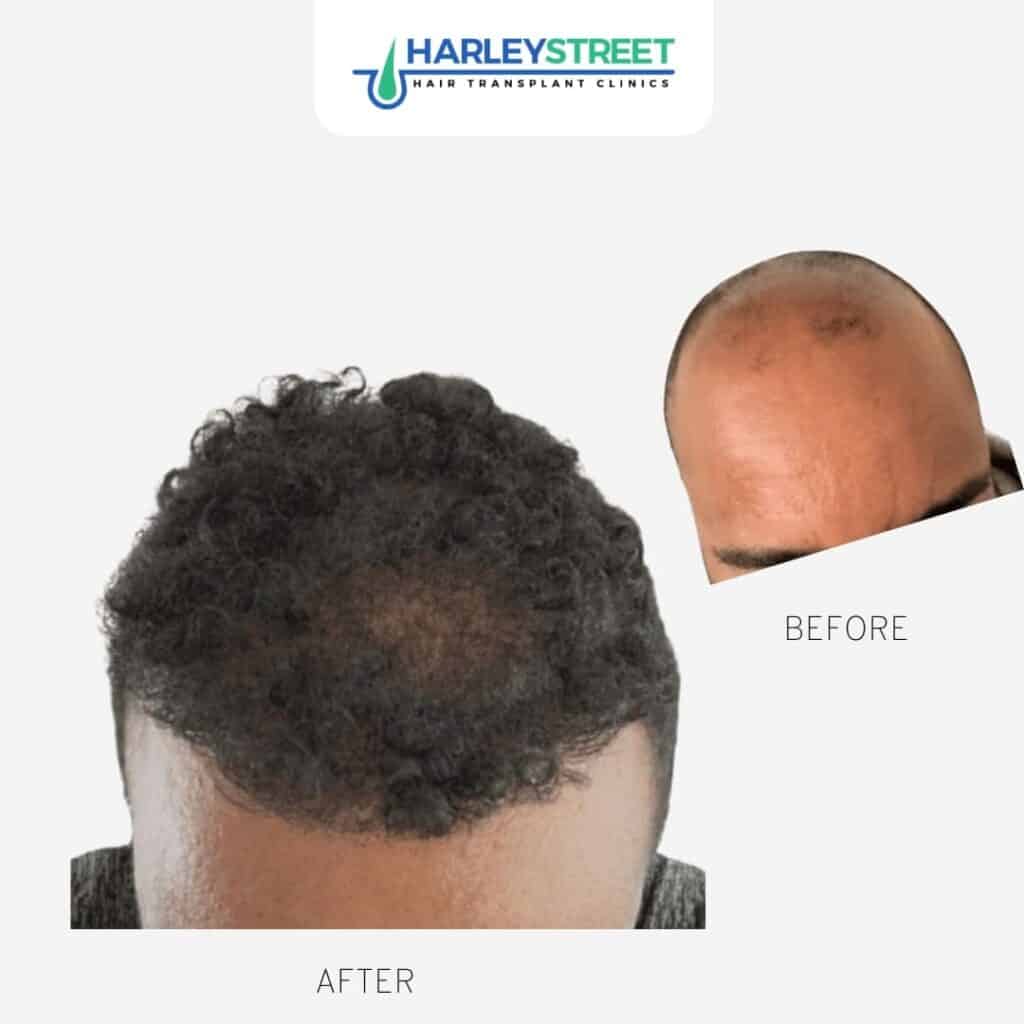
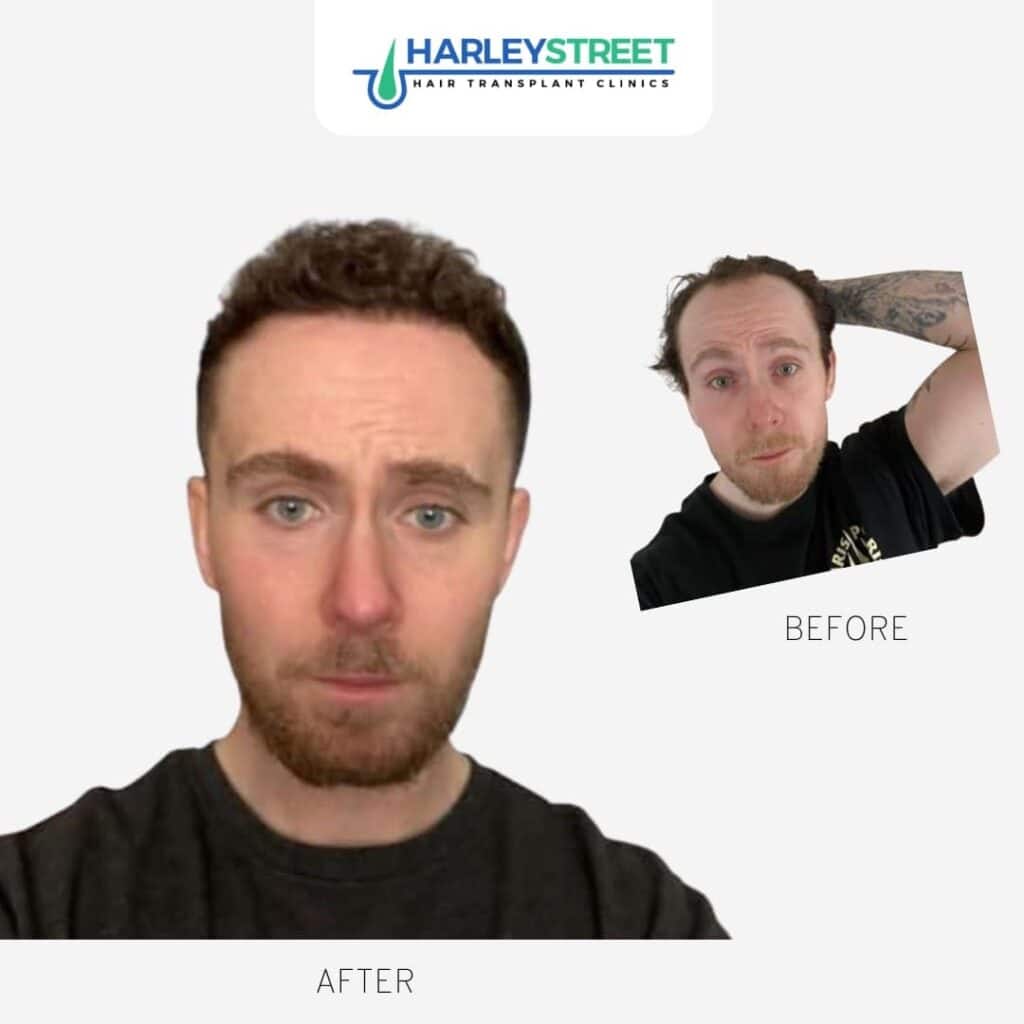
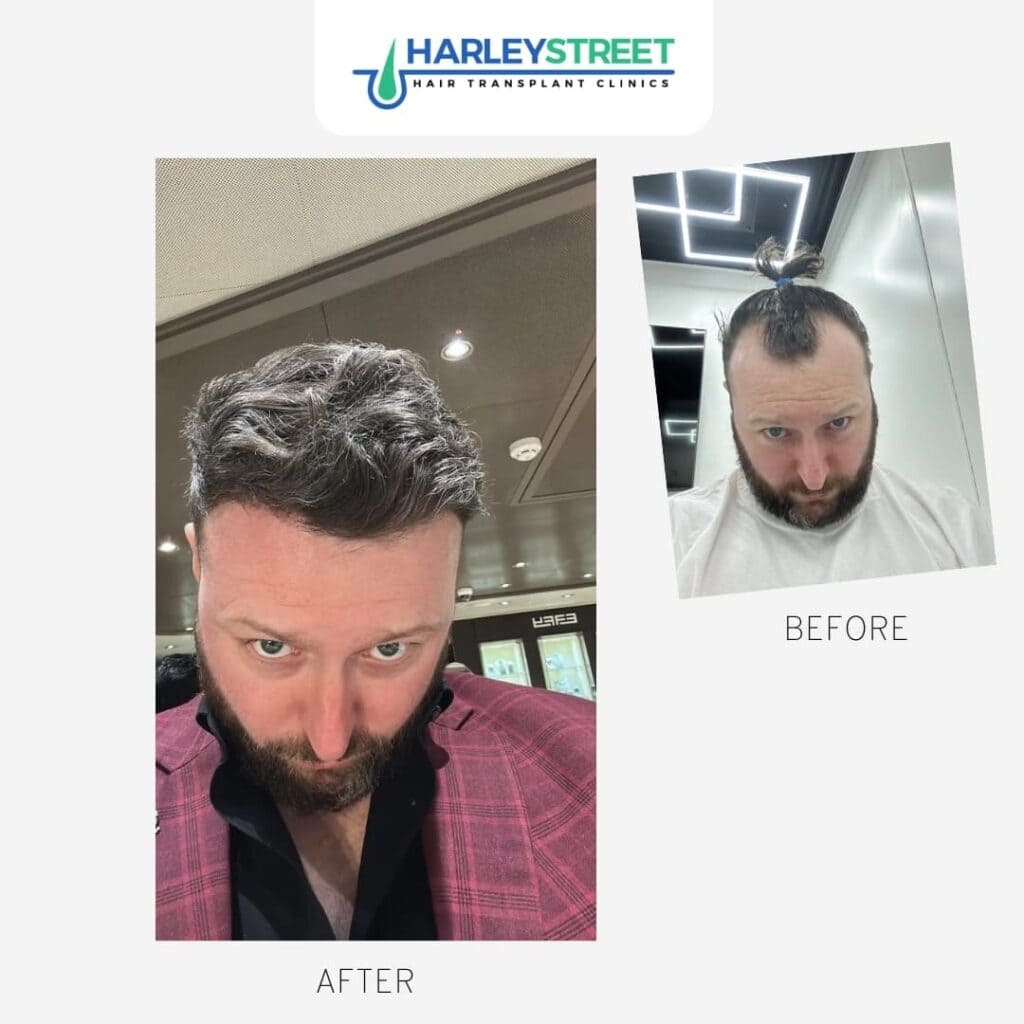
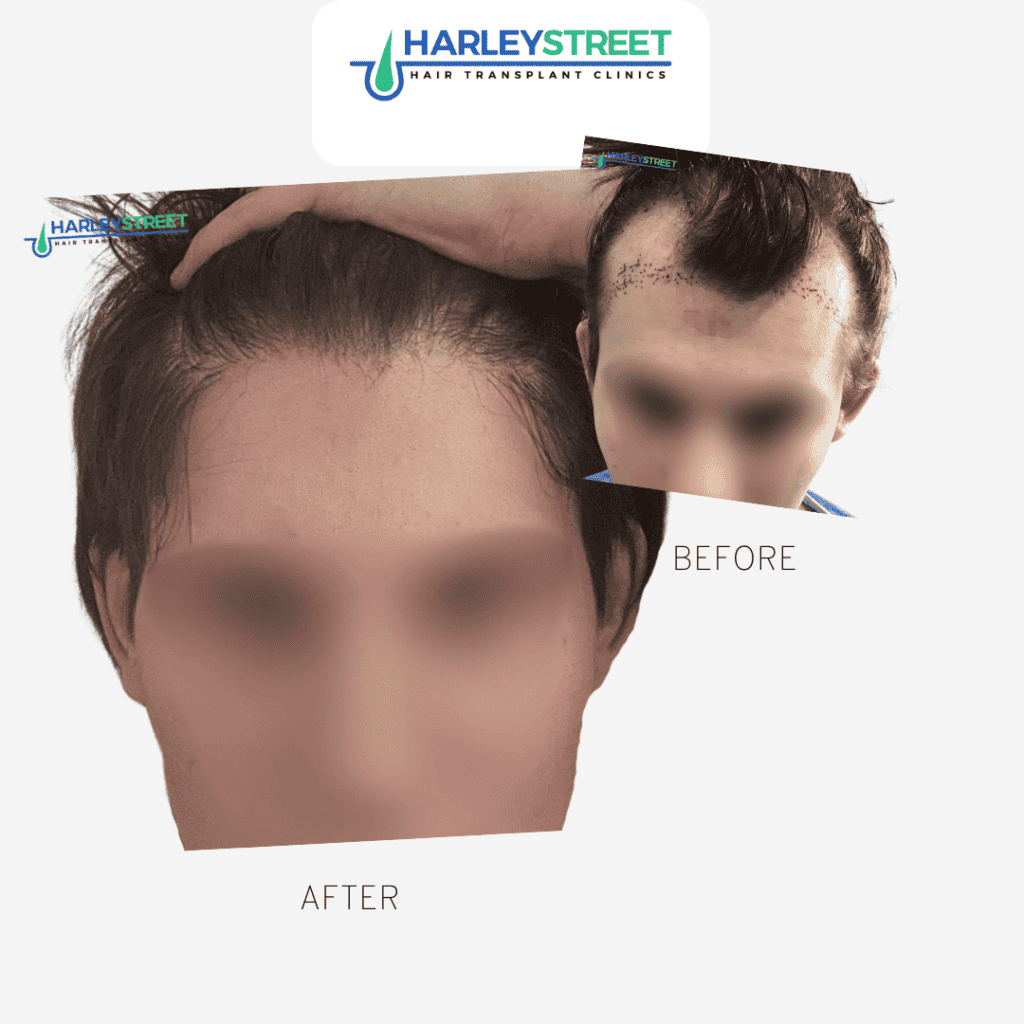
Before and After DHI Hair Transplant Results in Nottingham
A selection of results from patients treated at our Nottingham clinic. All procedures were performed by our GMC-registered surgeons.
The Similarities and Differences Between DHI and FUE Hair Transplant Methods
At the Nottingham hair transplant clinic, every patient we treat will receive a personalised treatment plan that attains the best result, based on their personal aims and expectations. With this in mind, it’s important to determine what hair transplant method is right for you
In simple terms, Follicular Unit Extraction (FUE) and Direct Hair Implantation (DHI) are two sides of the same coin. Both methods require the surgeon to individually extract hair follicles from the donor area using a micro punch tool. From here, all grafts are then categorised by a technician (into singles, doubles, and triples).
Where the two procedures differ is graft implantation procedure. During an FUE hair transplant, the surgeon will create tiny incisions (recipient channels) in the scalp. Once this phase is done, donor hair follicles are then implanted into these sites. The implantation process for DHI uses a specialised implanter pen. This performs incisions and implantations in one swift movement, allowing for a natural appearance and quick recovery time.
One of the main differences between the two techniques is cost. At the Nottingham clinic, FUE procedures generally fall within the £5,000–£7,000 range, whereas the same treatment carried out using DHI may cost between £6,000 and £8,000. This price difference reflects the use of specialised DHI instruments and consumables, which are more expensive.
Another practical difference between the two techniques lies in procedure time and how efficiently grafts are implanted. FUE tends to be the quicker option for larger transplant sessions, as the recipient sites are prepared beforehand and grafts can then be placed at speed. With DHI, each follicle is inserted one at a time using an implanter pen, which makes the process more meticulous but also more time-consuming. For this reason, DHI is often preferred for smaller, highly defined areas, whereas traditional FUE is usually better suited to treatments involving a larger number of grafts.
Who is a Good Candidate for DHI at the Nottingham Clinic?
DHI is an excellent option for patients seeking refined, highly controlled hairline restoration. It is particularly well suited to those in the earlier stages of hair loss, or anyone looking to rebuild a receding frontal hairline with absolute precision over graft angle, depth, and direction. Patients falling between Stages 3 and 5 on the Hamilton–Norwood Scale are typically strong candidates for this approach.
The technique also works exceptionally well when high-density results are required in specific areas, such as the frontal third of the scalp or zones where thinning hair needs strengthening rather than full replacement. In our clinical experience, DHI can offer improved graft survival compared to traditional FUE, making it a compelling choice for patients with a limited donor supply who want to maximise every available follicle.
However, for individuals requiring extensive coverage across larger balding regions, such as advanced crown loss or full top-of-scalp restoration (Norwood 6 and above), DHI may not be the most practical solution. In these cases, standard FUE implantation techniques often allow for faster graft placement and more efficient coverage, while still delivering natural, long-lasting results.
DHI Hair Transplantation in Nottingham: Why Stay in the East Midlands?
Choosing where to undergo a DHI hair transplant is just as important as choosing the technique itself. For many patients, Nottingham and the wider East Midlands offer the ideal balance of clinical expertise, accessibility, and long-term care without the costs or complications often associated with London clinics or overseas treatment.
Our Nottingham hair transplant clinic is centrally located within the East Midlands, making it easily accessible from Derby, Hucknall, Stapleford and Beeston, as well as from further afield via excellent road and rail links. This means patients can attend consultations, surgery, and follow-up appointments with minimal disruption, while still receiving consultant-led DHI treatment performed to the highest medical standards.
Unlike high-volume clinics in major metropolitan areas, DHI hair transplantation in Nottingham allows for a more personalised, patient-focused experience. Each procedure is carefully planned and carried out by GMC-registered, ISHRS-accredited surgeons, with an emphasis on natural hairline design, graft survival, and long-term results. This level of surgical involvement is a key advantage for patients seeking refined, precision-driven outcomes with DHI.
Being based in the East Midlands also offers a significant aftercare advantage. Patients benefit from convenient access to in-person follow-ups, ongoing clinical support, and continuity of care throughout the recovery and regrowth process. For many, this peace of mind is a major reason to choose a Nottingham clinic rather than travelling abroad, where aftercare is often limited or unavailable once you return home.
The DHI Hair Transplant Process: Your Treatment Journey in Nottingham
Your DHI hair transplant journey begins with a comprehensive consultation with one of our experienced patient advisors. This can be arranged either in person at our Nottingham clinic or conveniently online. During this initial stage, you’ll receive a tailored treatment plan designed around your goals, along with a transparent breakdown of costs so you know exactly what to expect.
As part of the consultation process, your surgeon carefully evaluates your pattern of hair loss, donor hair strength, scalp condition, and long-term outlook. Hairline design and density planning are discussed in detail to ensure the final result looks natural today and continues to suit you as hair loss evolves over time. Where appropriate, preventative treatments such as medication may also be recommended to help protect your existing hair.
The Day of Your Procedure
On the day of your procedure, surgery will start with the administration of local anaesthetic. You’ll remain awake throughout the procedure, but completely comfortable, with no pain during the extraction process. From here, individual hair follicles are gently extracted from the donor area.
Great care is taken to select only healthy, high-quality follicles while preserving the surrounding tissue. This meticulous approach helps ensure the donor area heals evenly and retains a natural appearance once recovery is complete. All extractions are carried out by the surgeon to maintain the highest clinical standards.
Following extraction, grafts are carefully prepared and stored in controlled conditions to protect their viability. Reducing the time follicles spend outside the body is a key priority, and each graft is handled by trained technicians to minimise trauma and maximise survival.
Implantation is then performed using a specialised DHI implanter pen. This allows the surgeon to place each follicle directly into the scalp with precise control over depth, angle, and direction in a single step. One of the key advantages of DHI is the surgeon’s direct involvement throughout the implantation phase, helping to achieve refined, natural-looking results.
Once the procedure is complete, you’ll receive clear, step-by-step aftercare guidance before leaving the clinic. This includes advice on washing, sleeping positions, physical activity, and medication where required. You’ll also gain access to our dedicated aftercare app, designed to support you throughout your recovery.
Your care doesn’t stop there. Follow-up appointments are scheduled at 2 weeks, 3 months, 6 months, and 12 months to track healing, monitor regrowth, and address any concerns along the way. This structured aftercare programme ensures you’re fully supported throughout the early stages of recovery and beyond.
The Cost of a DHI Hair Transplant in Nottingham
The cost of a DHI hair transplant at our Nottingham hair transplant clinic is influenced by several factors, including the number of grafts required, the complexity of the procedure, and the level of surgical involvement needed to achieve natural-looking results. Larger or more technically demanding cases typically require additional time and precision, which is reflected in the overall investment.
At our Nottingham clinic in the East Midlands, most DHI hair transplant procedures are priced between £6,000 and £8,000. Most one-stage procedures (temples, hairlines, frontal third, crown) tend to fall in this price range.
Smaller, highly targeted treatments (e.g eyebrow transplants) usually start from around £5,000. DHI can also be used for beard transplants, offering precise follicle placement and natural density for patients seeking facial hair restoration in Nottingham and the surrounding areas.
To make treatment more accessible for patients across Nottinghamshire and the wider Midlands, flexible finance options are available for eligible patients. These allow the cost of treatment to be spread across manageable monthly instalments of up to 11 months. Full pricing details and finance options are discussed during your Nottingham consultation, with no obligation to proceed unless you are fully comfortable with both the treatment plan and the cost.
The Nottingham Hair Transplant Clinic: Medical Standards, Regulation, and Aftercare
All hair transplant procedures at our Nottingham clinic are performed under strict medical regulation. The clinic operates under Care Quality Commission (CQC) oversight, with all critical stages of treatment carried out by GMC-registered and ISHRS-accredited surgeons. This ensures patients receive safe, ethical, and consultant-led care at every stage of their hair restoration journey.
As a leading hair transplant clinic in Nottingham, we place a strong emphasis on surgical planning, clinical judgement, and long-term outcomes. Each procedure is carefully tailored to the individual, with results designed to look natural today and remain appropriate as hair loss progresses.
Comprehensive aftercare is included as standard for all patients treated at our Nottingham location. You’ll receive a full aftercare kit, along with a complimentary supply of hair loss medication where clinically appropriate, to support healing and optimise regrowth.
Patients also benefit from ongoing access to clinical support and in-person follow-up appointments at our Nottingham clinic throughout the recovery process. This level of continuity of care is a major advantage for patients in Nottingham, Nottinghamshire, and the wider East Midlands, and a key reason many choose local treatment over travelling abroad.
Book Your Free Consultation in Nottingham
Speak to one of our GMC-registered surgeons about your hair loss. No obligation, no hard sell.
Where to Find Us
Hair Transplant Nottingham is centrally located and easily accessible from across the East Midlands.
Hair Transplant Nottingham
6th Floor, City Gate East
Tollhouse Hill
Nottingham
NG1 5FS
The clinic is a short walk from Nottingham train station and the NET tram network. Easy access from the M1 motorway with several car parks nearby in the city centre.
Patient Testimonials
Aside from achieving fantastic results, we believe that keeping in touch with our patients before, during and after their hair transplantation procedure is paramount – it helps to keep our patients feeling calm and in control. We’re always on hand to provide guidance, support and aftercare advice. Time and again, our patients tell us that this is what sets us apart from other clinics.
You can read our great reviews of FUE hair transplants over on Google and Trustpilot


Frequently Asked Questions
A dhi hair transplant uses follicles from the donor area at the back and sides of the scalp, implanted into areas of thinning or loss. All procedures at our Nottingham clinic are performed by GMC-registered surgeons.
Most patients return to work within a few days. Transplanted hairs shed at 2 to 4 weeks, which is normal. New growth begins at 3 to 4 months and the majority of the final result is visible by 9 to 12 months.
The procedure is performed under local anaesthetic. Most patients experience minimal discomfort during treatment.
Cost depends on the number of grafts required. Your patient advisor will provide an exact quote during your free consultation. Finance options are available.
The best way to confirm suitability is through our free consultation. Your surgeon will assess your donor density and discuss realistic outcomes.
Graft counts depend on the area treated and degree of hair loss. Typical procedures range from 1,000 to 3,000 grafts. Your surgeon will give an accurate estimate.